Batch Process Tanks

[SRD-Series] [CDM-Series] [ECS-Series] [HT-Series] [On-The-Fly Degassers] [Batch Degassing Tanks] [Curative Melters] [Urethane Casting] [Resin Transfer Molding] [Vacuum Potting & Encapsulating] [Vacuum Chambers]

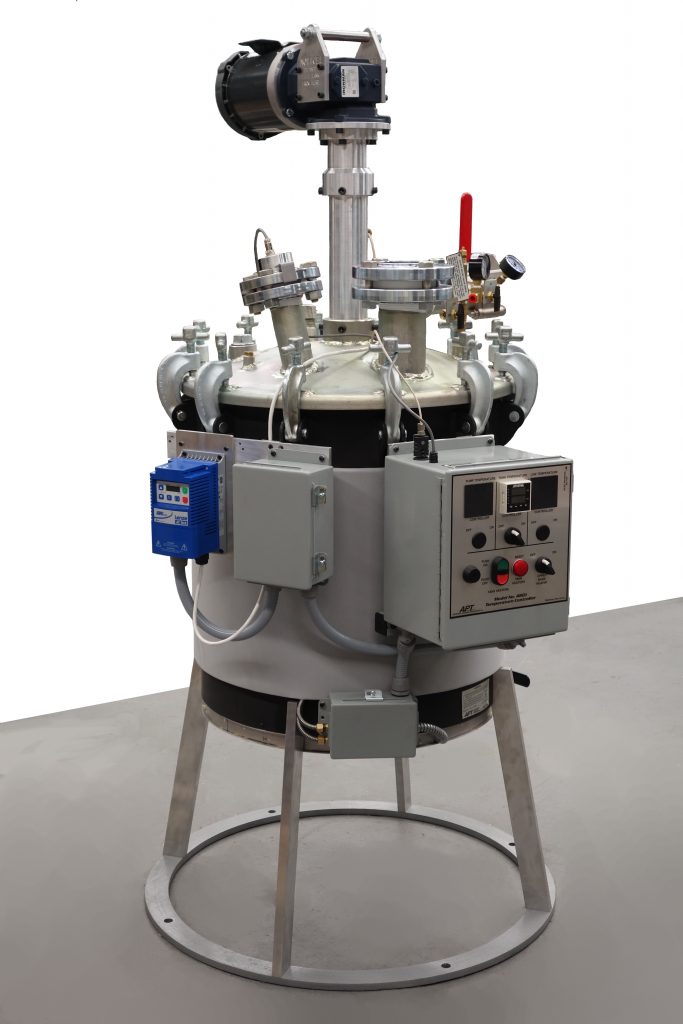
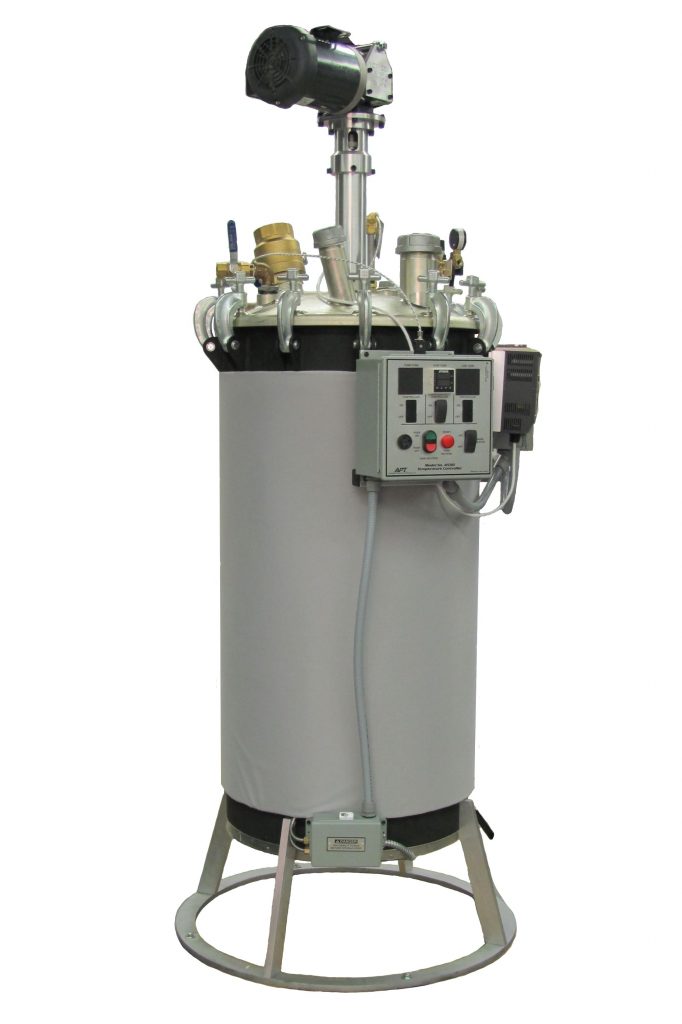
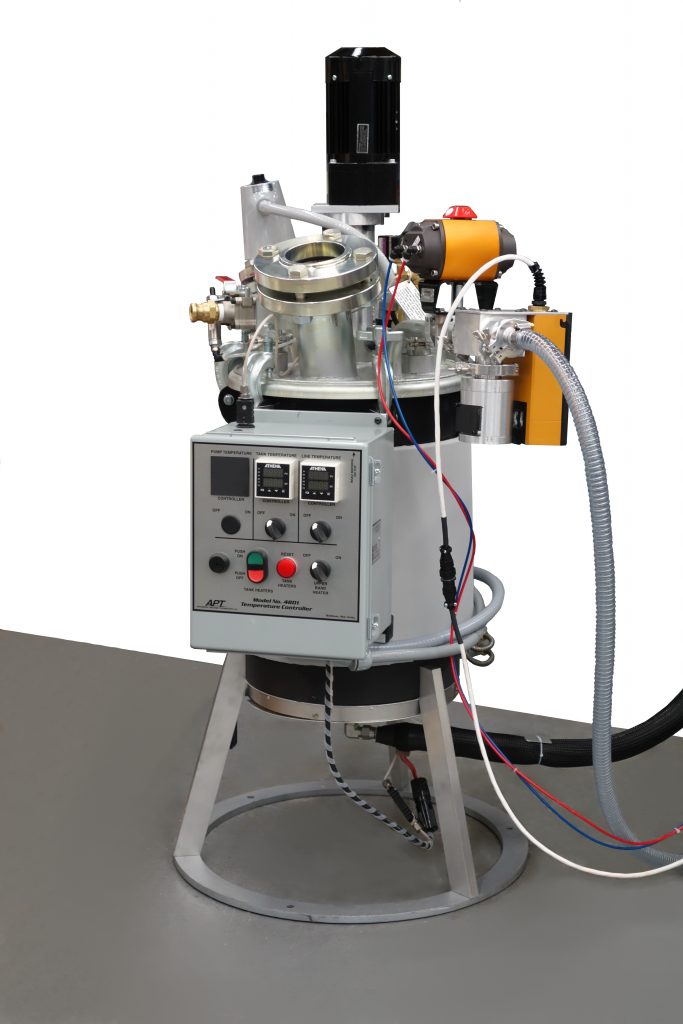
2-Gallon & 75-Gallon Batch Tanks

Batch Tanks – for Heating, Agitating, and Vacuum Degassing

These tanks are used for mixing, heating and degassing batches of resin. They are
also available without heat. One tank can be purchased for hand-batching or multiple
tanks can be used for automatic machine processing. Quantities prepared this way
can range from two-pounds to two-thousand pounds and more. Much larger quantities
are continuously heated and degassed in our on-the-fly degassers.

Batch Tank – Benefits:

  • Peace-of-mind, you know the entire batch is ready before you pour.
  • Provides high-quality, air-bubble and void-free resin materials.
  • Maintains materials at precise preset temperature (+/- 1oF) to 285oF or more.
  • Available in 0.5, 2, 5, 10, 15, 30, 60, 75, 100 and 250-gallon tank sizes with many standard options to match your specific process requirements.
  • Independent temperature controls let you connect various sizes and types of portable APT tanks to your process equipment.
  • Rugged construction offers dependable operation.

Description/Operation:

You can manually pour a batch of resin into the tank’s fillport or draw it in via vacuum (i.e., the same vacuum you use for degassing) with an optional Resin Vacuum Transfer System.
Once the material is raised to the required elevated temperature and viscosity is lowered, vacuum breaks the air-bubbles and dissolved gasses. This can result in a violent bubbling action, which settles-down as most of the air is removed.
The agitator’s pumping motion continues to bring fresh material to the resin’s surface for outgassing — up on the sidewall and down along the agitator shaft, which also helps to maintain homogenous temperature control and proper suspension of fillers throughout the batch.
Once fully heated and outgassed, the material can be fed to your hand-casting station or to downstream automatic equipment. Gravity or dry nitrogen gas over-pressure (used to eliminate moisture contamination) can be used to drive material out of the tank. When constant vacuum is maintained on the material or when material recirculation (from the tank, to the metering pump, to the mixer and back to the tank) is required, internal or external feed pumps can be used to provide necessary positive output pressure to the machine.
These tanks are available without heat and special APT tanks, with high- temperature control to 500oF, are available. Electric heat is standard. We also supply heated oil-jacketed tanks.

30-Gallon Batch Tank

Material Temperature and Vacuum Levels:

Resins typically require heating and agitation to significantly lower the resin’s viscosity and surface-tension — to remove all the air and dissolved gasses — prior to metering, mixing and dispensing into molds. Some low viscosity materials are easily outgassed without heat, however, consistent degassing with materials having a viscosity of 1,000 cps or higher often relies on precise (±1oF) temperature control of the materials. Consistent outgassing requires accurately controlled temperatures and vacuum levels.

To eliminate air-bubbles, no matter how air-free the materials might look coming out of the supply drums, vacuum must be drawn on the materials. The entire range of vacuum levels typically used to remove air from resin materials ranges from 5 millimeters vacuum to 0.05 millimeters (50 microns) from perfect vacuum. Degassing at levels between 5.0 mmHg and 2.0 mmHg makes low to medium viscosity urethane and epoxy resins visibly “air-free”. If you pot or encapsulate high voltage electrical or electronic components, 1.0 mmHg vacuum or less will be required and you will typically need to pour those parts inside a vacuum chamber. APT manufactures a wide variety of Vacuum Potting Systems, including mixing machines and vacuum chambers. If your materials include volatile components that will gas-off quickly or they just need need some slight vacuum (for example, 25 to 29 inches of mercury) to remove gross air, we offer timed vacuum sequences in place of constant vacuum.

Vacuum Levels Required for Degassing Resins:

30″ Vacuum = 0.0 mmHg (Torr) = 0.0 microns = Perfect Vacuum
0.05 mmHg (Torr) = 50 microns
0.1 mmHg (Torr) = 100 microns
0.5 mmHg (Torr) = 500 microns (Resin is degassed at 50 to 500 microns to vacuum pot and
encapsulate critical high voltage assemblies and epoxy composite components.)
1.0 mmHg (Torr) = 1,000 microns
2.0 mmHg (Torr) = 2,000 microns (Resins degassed at 500 to 2,000 microns are typical for
most vacuum potting and epoxy composite resin infusion applications.)
5.0 mmHg (Torr) = 5,000 microns (Resin is degassed down to 2 to 5 mmHg to pour and cast
visibly air-free cast urethanes and epoxies. 5 mmHg is five times better than 29″ of vacuum.)
10.0 mmHg (Torr) = 10,000 microns
29″ Vacuum = 25.4 mmHg (Torr) = 25,400 microns
28″ Vacuum = 50.8 mmHg (Torr) = 50,800 microns (Very low viscosity materials are degassed
at 10 to 50 mmHg vacuum.)
15″ Vacuum = 381 mmHg (Torr) = 381,000 microns
0″ Vacuum = 762 mmHg (Torr) = 762,000 microns = Ambient Air


Light-Beam Vacuum Trap

Light-Sensing Vacuum Traps Eliminate costly vacuum pump rebuilding and cut downtime. This liquid trap stops foamed resin from flooding the vacuum pump while degassing. When the glass-tube receiver has just 30ccs of resin inside, the light-beam and reflector sense it, the valve closes, an alarm sounds and the flood of resin stops. The receiver (see inset) comes apart four pieces for easy cleaning.


Vacuum Pump

Vacuum Pumps 11-, 20-, 55-, 100-CFM and larger are available from APT. Complete assemblies include a motor-starter, a manual switch mounted on the control panel, a bleed valve and an analog gauge on the tank lid, plus plumbing to the tank. An optional electronic vacuum sensor, mounted on the tank lid with an automatic control valve, can hold preset vacuum setpoints on material in the tank. Preset vacuum levels can optionally be entered at the operator-interface control panel on the meter/mix machine.


The Heateroll - Drum Rolling/Melting Oven

The Heateroll® - 55-Gallon Drum Heating/Melting Oven Melts one drum, fast. The combined heating and rotating action of the The Heateroll® typically preheats drums 6 to 8 times faster than conventional “stand-up” drum heating methods. Operates with ceramic-enclosed infrared heaters. Saves energy and minimizes thermal degradation of the material. Inset shows the Heated Compartment, which slides over the drum, in the closed position. Temperature Range: 90oF to 200oF. Keeps filler in suspension.


Recent Posts